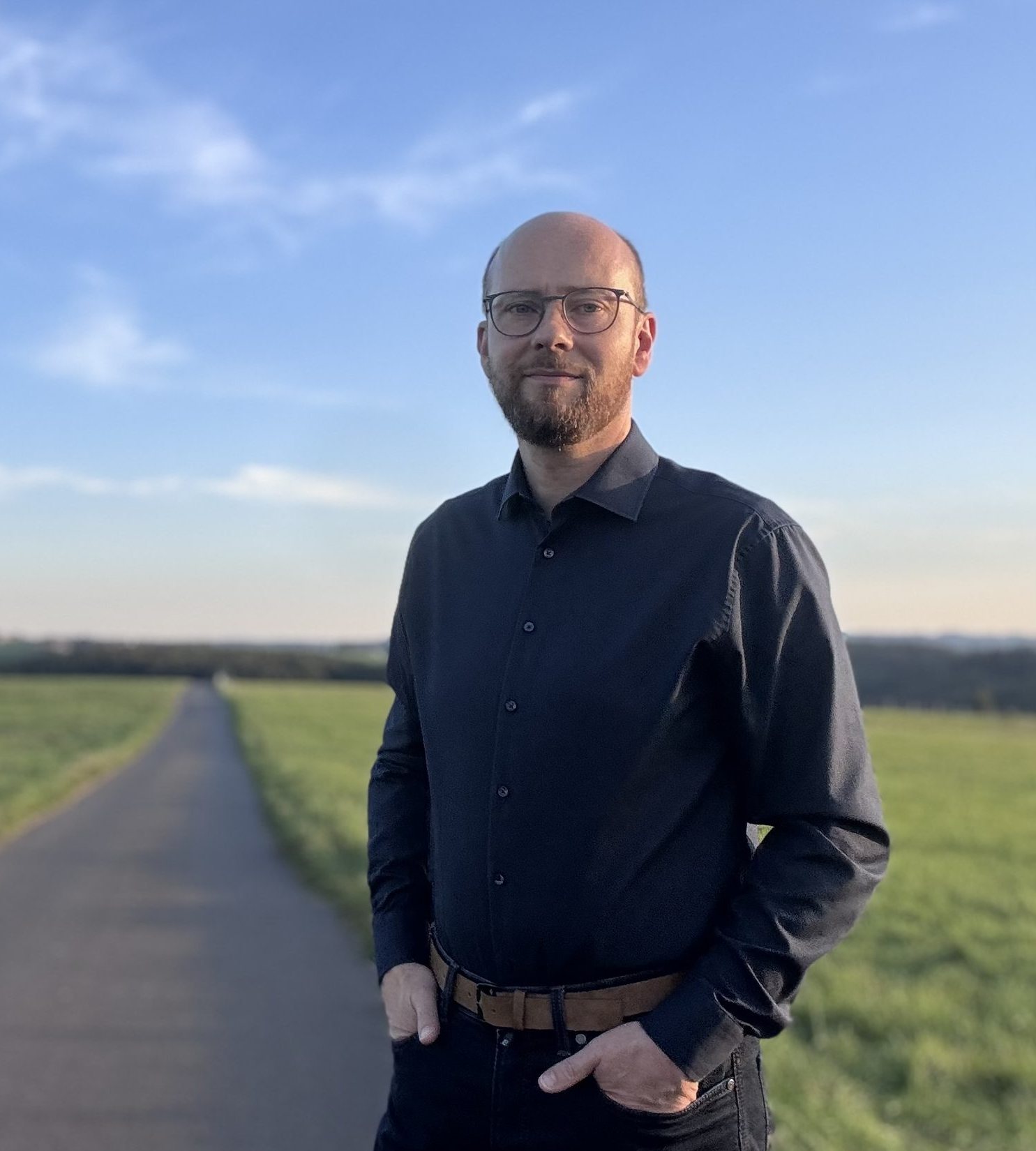
Björn Bredenkamp standing on a country road between fields in evening sun, looking into the camera.

Coaching for Sales Engineers and sales leaders

The last 1%
is you.

You have the skill, the experience and the track record. Coaching works on the part that decides the rest: how you show up when it counts.

Free · 30 minutes · online · no pitch

The last 1%

Knowing what to do is not the same as doing it when it counts.

“Just show me the demo.”The CFO leans back, and everything you prepared is gone.

You have done the work: the trainings, the books, the frameworks. On paper, nothing is missing. Then your team stalls on a big deal, and you step in and close it yourself, again.

If training were the issue, the training would have fixed it. The last 1% is how you show up in those moments: present and calm, choosing what to do instead of falling back on what you have always done.

That is what coaching works on. Not one more framework, but space to change how you show up.

Why work with Björn

Before he became a coach, Björn spent 25 years in Sales Engineering, IT architecture and technical and sales enablement, among other roles as an IBM-accredited IT Solution Architect and Technical Product Advocate.

So he knows where training ends and coaching begins. And he knows the pressure of a live demo from the inside, not from a textbook.

25
years in Sales Engineering, IT architecture and enablement
600+
people reached through the enablement he built
10+
Sales Kickoffs supported
250+
hours of coaching practice
CPCC
Certified Professional Co-Active Coach, working to the Code of Ethics of the International Coaching Federation (ICF)
Björn Bredenkamp sitting in an armchair with a notebook, looking out of the window.

Why I do this

Every assessment said I was built to work alone. The work that fulfils me, I found with people.

I remember standing at a whiteboard, sketching an architecture I had built a dozen times before. Every requirement was checked. On paper I was at 100% efficiency. Inside, I wasn't there at all.

I work with Sales Engineers and sales leaders who are very good at their job and sense that being good is no longer enough. I know that place. I stood there too.

Read my story

Every personality assessment I ever took said the same thing. DISC, Myers-Briggs, CliftonStrengths: work independently, analyse, structure, solve problems. An introverted, rational perfectionist. The message was clear: you do your best work on your own.

It was accurate. I still liked working in teams. The tricky parts I mostly solved alone.

The change came when I started looking past the technology at the person in front of it. For years I trained IT professionals and salespeople. The sessions that stayed with anyone were never the ones where I explained something well. What had shifted in them was mental, a change of perspective, and I wanted to know what caused it.

Then I sat down for my first day of coach training, and none of what I knew helped. Familiar concepts didn't apply. The exercises asked for a skill set I had underused for years. I was lost and couldn't hide it.

That day is why I didn't stop at a certificate of attendance. Afterwards I spent six months comparing programmes before I chose one, then two years of intensive training and more than 250 hours of practice before I certified. I didn't want to be a coach who had read a couple of books.

Today I am a Certified Professional Co-Active Coach. Those two years didn't give me another framework. They gave me the attention to notice what is happening in a conversation while it is still happening.

How it works

How coaching with me works

Chemistry Call

30 minutes, free. Bring one situation you haven't solved yet. You get a clearer view of it and an honest answer on whether coaching fits.

Foundation

The first session: your values, what drives you, and the goals for our work together.

Forward and Deepen

Every session moves you to action and deepens what you learn from it. Small structures keep both going in between.

Completion

The last session: you bring together what you have learned, measured against your original goals.

Forward and Deepen is what coaching is for: change, which requires both learning and action, at the same time, in every session.

You hire a coach because you want something to be different. Change happens in two ways that never come apart. You learn more about yourself: what you want, who you are becoming, what makes you tick. And you take action that redefines what is possible for you and creates your next place to learn and grow. The two move together, and my job is to make sure both are happening for you at once. That is what makes coaching coaching, rather than therapy, consulting or a good conversation with a friend.

Between sessions, structures keep the learning and the action going where it is hardest to stay on track. We play with them until we find what works for you.

Book a Chemistry Call

How I coach

Co-Active Coaching

Co-Active (opens in a new tab) is a relational model for coaching, leadership and life that integrates who you are with what you do. I trained and certified in it at the Co-Active Training Institute. We work as equal partners: you bring the topic and the expertise on your life, I bring the process and my full attention.

Transactional coaching

Works on the problem in front of you. You often get advice or a tool and leave with a plan for this one situation. When the next similar situation comes, you need help again.

Transformative coaching

Works on the person who has the problem: how you think, what you believe about yourself and how you show up under pressure. You find your own answers, and the change carries into situations we never talked about.

Transformative coaching asks more of the coach. Holding that space and depth safely takes the full set of coaching competencies defined by the International Coaching Federation (ICF). That is the difference between an average coach and a professional one, and it is the coaching I offer.

  • Certified Professional Co-Active Coach (CPCC), Co-Active Training Institute.
  • My coaching is aligned with the Core Competencies of the International Coaching Federation (ICF).
  • My coaching practice complies with and adheres to the ICF Code of Ethics (opens in a new tab).

Sources: What is Co-Active? (opens in a new tab) · CTI ICF-accredited programs (opens in a new tab) · CTI accreditation & affiliations (opens in a new tab)

Questions you might have

How is coaching different from training, consulting, mentoring, supervision or therapy?
TrainingConsultingMentoringSupervisionTherapyCoaching
BuildsKnowledge and skillsA solution to a problemGuidance from someone who has walked the pathReflection on your professional practiceHealing and stabilityA change in how you think and act
The answers come fromThe trainerThe consultantThe mentor's experienceYou and the supervisor, looking at your casesYou, with the therapist's clinical expertiseYou
FormatThe same content for a groupAnalysis and a recommendationAdvice and shared experienceCase reviews, often in a groupTreatment, often looking at the past1:1 conversations about where you want to go
Works best whenYou are missing know-howYou need expertise you don't haveYou want to learn from someone a step aheadYou work with people and want to reflect on your casesSomething weighs on you that needs treatmentYou know what to do and still don't do it when it counts

If something comes up in coaching that belongs with a therapist, I'll tell you.

What is Co-Active Coaching?

The coaching model I trained and certified in (CPCC) at the Co-Active Training Institute. We work as equal partners: you bring the topic and the expertise on your life, I bring the process. Every session moves you to action and deepens what you learn from it. That is where Forward and Deepen comes from. More on Co-Active from CTI (opens in a new tab)

What is the difference between transactional and transformative coaching?

Transactional coaching works on the problem in front of you. You often get advice or a tool and leave with a plan for this one situation.

Transformative coaching works on the person who has the problem: how you think, what you believe about yourself and how you show up under pressure. You find your own answers, and the change carries into situations we never talked about. This depth is what CPCC training prepares a coach for, and it is the difference between an average coach and a professional one.

Why hire a certified coach?

“Coach” is not a protected title in Germany. Anyone can call themselves one. A certification from a programme accredited by the International Coaching Federation (ICF) tells you the coach was trained to a published standard, their coaching was observed and assessed, and they work under a code of ethics that protects you. My practice adheres to the ICF Code of Ethics (opens in a new tab).

Can AI replace a coach?

Not the part that makes coaching work. AI can offer something like transactional coaching: it helps you get organized, prepare, spot patterns and keep the action going between sessions. Transformative coaching needs the human side. AI cannot be fully present with you, notice what you leave unsaid, challenge you because your agenda matters to it, or hold a confidential space built on trust. Change happens in that relationship.

More in my article: AI in Performance Coaching, a toolkit, not a replacement

What should I watch out for when choosing a coach?
  • Ask which body accredits their training and whether their coaching was assessed.
  • Ask which code of ethics they follow and what happens with what you tell them.
  • Notice who talks most in the first call. A coach who mostly gives advice is consulting.
  • Be careful with guaranteed results. Nobody can promise what you will do.
  • Ask where coaching stops. A good coach tells you when a topic belongs with a therapist.
  • Trust the chemistry. If the first conversation doesn't feel right, keep looking.

How I think about this

All insights →

I provide the space for change when rational perfectionism isn't enough anymore.

Not sure which fits? Book a Chemistry Call